




Twitter Marketing: A Practical Guide for Businesses
Digital MarketingOCT 06, 2026
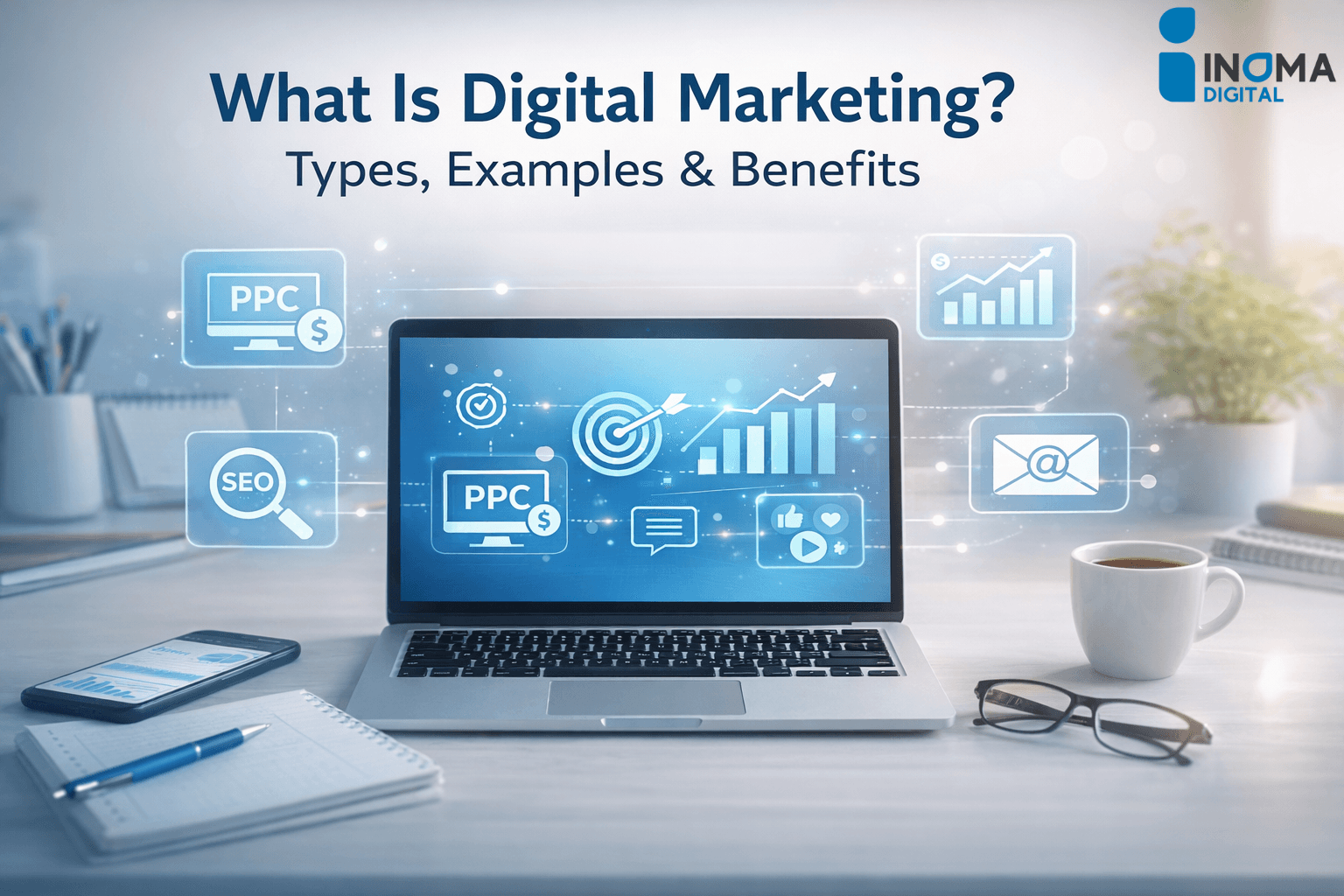
Digital marketing has become the backbone of modern business growth. Over 5.5 billion people now use the internet worldwide, and businesses that ignore this reality risk becoming invisible to their target audience.
If you run a business or manage marketing operations, you face a common challenge. Traditional advertising channels like TV, radio, and print media offer limited targeting and almost no measurable results; you spend money without knowing exactly what worked.
This guide explains what digital marketing is, breaks down its major types, and shows you how to use these channels to grow your business.
Digital marketing is the use of online channels, search engines, social media, websites, email, and paid advertising, to promote products or services, reach targeted audiences, measure performance in real time, and support business growth through data-driven decisions.
Unlike traditional marketing, digital marketing allows direct interaction with users and precise tracking at every stage of the customer journey.
Digital marketing relies on the internet, online platforms, analytics tools, and user behavior data, with Google, social networks, and tracking software all playing a central role.
Digital marketing supports how people search, compare, and buy today. Customers rely on online research before making decisions. Businesses that lack a digital presence lose visibility and trust.
A small local shop can target nearby customers, while an e-commerce brand can sell worldwide, using largely the same digital channels.
Traditional marketing focuses on print, radio, and television. Digital marketing relies on online platforms instead.
| Factor | Traditional Marketing | Digital Marketing |
|---|---|---|
| Cost | Larger, fixed budgets | Smaller, flexible spending |
| Tracking | Limited, delayed | Real-time clicks, views, conversions |
| Targeting | Broad, demographic-based | Precise, intent-based |
| Speed | Slow to launch or adjust | Launches and adjusts quickly |
Small businesses, SaaS companies, travel agencies, and marketing agencies alike rely on digital marketing to stay visible and competitive.
Digital marketing spans multiple channels and strategies. Each type plays a different role and targets users at a different stage of the customer journey, from awareness through conversion and retention.
Search engine optimization improves a website’s visibility in organic search results on Google, Bing, and other search engines, helping your site appear when users search for products, services, or information related to your business.
SEO delivers long-term organic traffic and offers one of the highest-ROI channels in digital marketing. Common tools include Google Search Console, Ahrefs, Semrush, Moz, and Screaming Frog.
Search engine marketing uses paid ads to appear at the top of search results instantly, ideal for businesses that need quick visibility while SEO builds over time.
How SEM works: advertisers bid on keywords, ads enter a real-time auction, placement depends on bid amount and quality score, and payment occurs per click.
Common SEM ad types: search ads, display ads, shopping ads, YouTube video ads, and remarketing ads.
Key metrics include cost per click, click-through rate, conversion rate, and return on ad spend.
Pay-per-click is an ad model where advertisers pay only when users click their ads. PPC extends beyond search engines to social media, display networks, and ecommerce platforms.
Popular PPC platforms include Google Ads, Facebook and Instagram Ads, LinkedIn Ads, TikTok Ads, and Amazon Ads.
Successful PPC relies on audience targeting, strong ad copy, bid management, landing page optimization, and continuous A/B testing.
Social media marketing uses the platforms where people already spend time to build brand awareness, engage audiences, and drive traffic or conversions.
Facebook works well for broad audiences, Instagram for visual content, LinkedIn for B2B, TikTok for short-form video, and YouTube for long-form video.
Organic social media focuses on content and engagement, while paid social accelerates reach through targeted advertising. Engagement rate, reach, and impressions are the primary metrics that measure performance.
Content marketing attracts and retains audiences by providing useful, relevant information instead of direct promotion. Common formats include blog posts and guides, ebooks and whitepapers, infographics, videos and webinars, case studies, and templates or tools.
Content marketing supports SEO, builds trust, and generates qualified leads at a lower cost than traditional advertising.
Conversion rate optimization increases the percentage of visitors who complete a desired action, whether that’s a purchase, sign-up, or inquiry. Core methods include landing page optimization, A/B testing, heatmaps and session recordings, funnel analysis, and user feedback surveys.
Even small CRO improvements can significantly increase revenue without needing more traffic.
Email marketing communicates directly with subscribers to build relationships and drive repeat sales. Common campaign types include welcome sequences, newsletters, promotional emails, abandoned cart reminders, re-engagement campaigns, and post-purchase follow-ups.
Email marketing delivers one of the highest-ROI channels available, especially when combined with segmentation and automation.
Affiliate marketing rewards partners for promoting your products or services, paying commissions only when conversions actually occur. Affiliates share tracking links, customers click and purchase, sales get recorded, and commissions get paid. Popular networks include Amazon Associates, ShareASale, CJ Affiliate, and ClickBank.
Influencer marketing partners with creators who already have audience trust. Nano and micro influencers work well for niche audiences, while macro and mega influencers offer larger reach. Campaigns include sponsored posts, product reviews, brand partnerships, and affiliate collaborations.
Video marketing uses visual content to educate, explain, and convert. Popular formats include explainer videos, product demos, customer testimonials, tutorials, short-form videos, and live streams. Optimized titles, descriptions, captions, and thumbnails all improve video discoverability.
Mobile marketing targets smartphone users through SMS campaigns, push notifications, in-app ads, mobile-optimized websites, and location-based targeting. Mobile-first indexing makes mobile optimization essential for both SEO and user experience.
Digital marketing analytics tracks performance and guides decisions using tools like Google Analytics 4, Google Search Console, Google Tag Manager, social media insights, and CRM platforms. Key metrics include traffic sources, user behavior, conversion rates, customer acquisition cost, and return on investment.
Data-driven strategy is what turns all the channels above from separate tactics into a coordinated system.
Each digital marketing channel delivers results, but integrating them multiplies effectiveness by creating seamless customer experiences.
Start focused, master your core channels, then scale. Integration, testing, and ongoing optimization are what actually maximize results.
A local service business uses local SEO and Google Ads to appear in nearby searches. Customers find the business when they need services quickly.
An online store uses social ads to attract users, email automation to recover abandoned carts, and SEO to support long-term traffic.
A consulting firm publishes educational content and uses CRO to convert visitors into inquiries.
These tools track traffic, user behavior, and conversions.
They support keyword research, ad management, and competitor analysis.
These platforms manage campaigns, scheduling, and email workflows.
Focus on SEO and content optimization to improve visibility.
Improve targeting and landing page performance through CRO.
Analyze user behavior and test page elements to refine the funnel.
Digital marketing leverages SEO, PPC, SEM, social media, CRO, and affiliate marketing to drive measurable traffic, generate leads, and boost revenue. Integrated strategies ensure every channel works together to maximize results.
Inoma Digital builds data-driven digital marketing strategies that increase visibility, attract qualified leads, and deliver measurable growth.
Ready to take your business to the next level? Get started with Inoma Digital and let’s grow smarter together.
A digital agency built on systems, clarity, and long-term results. Helping businesses through strategy, design, technology, marketing and business growth.