



24 Social Media Content Ideas That Boost Engagement
Social Media MarketingOCT 13, 2026
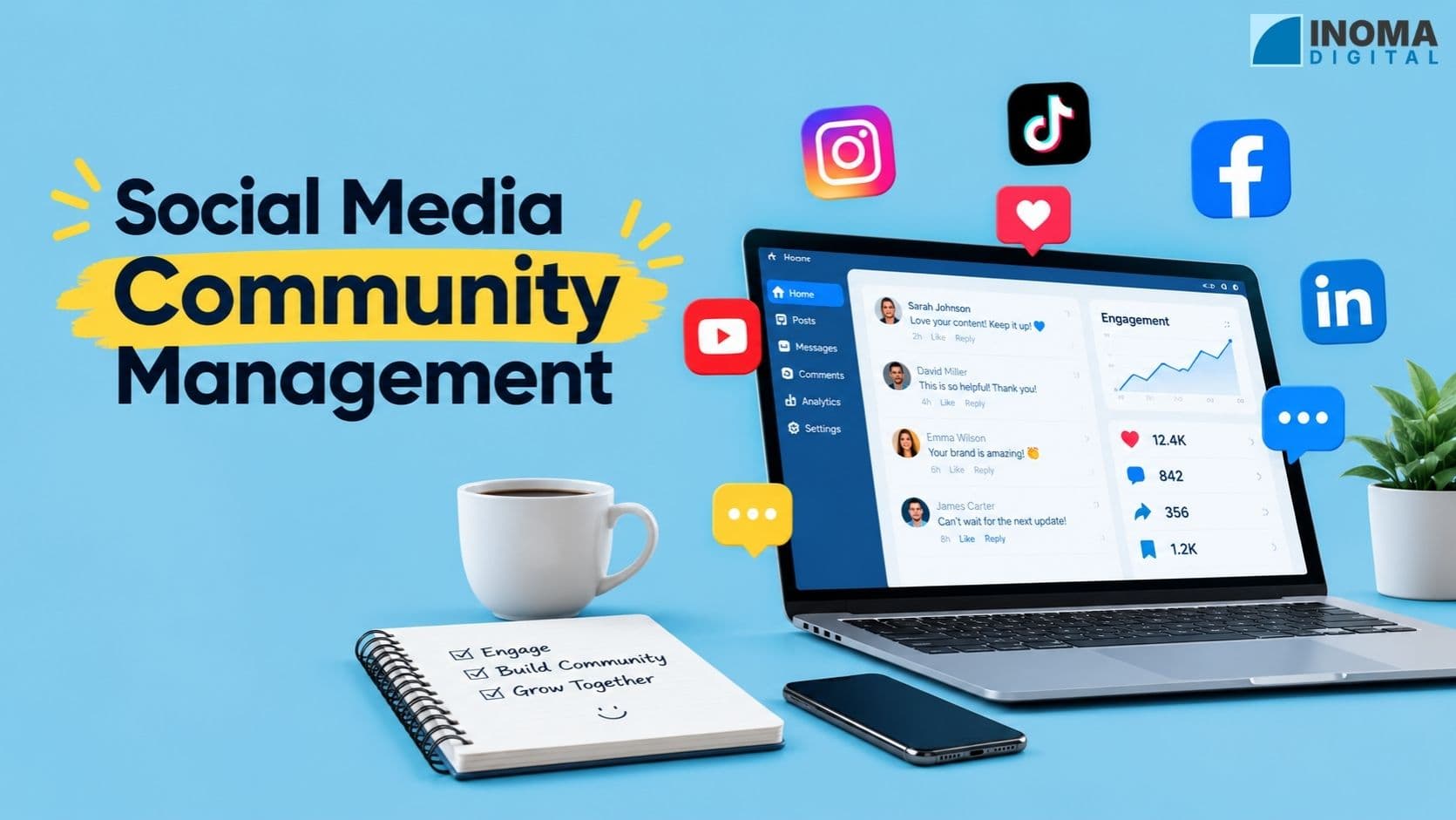
Social media community management is the work of building relationships with your audience on social platforms. A community manager replies to comments and direct messages, moderates conversations, and turns followers into brand advocates.
Many brands post every day and still hear silence. Comment threads go unanswered. Complaints sit in the inbox. That gap costs you loyalty and reach.
This guide shows you how to close it. You will learn what community management is, why it matters, and how to build a community management strategy in seven steps. You will also see how Duolingo, Oatly, and Among Us run their communities.
Social media community management is the process of building and nurturing an online community around your brand. It covers community management on social media in every form: replying to comments and DMs, moderating discussions, encouraging participation, and tracking sentiment. The goal is to turn followers into customers who stay and recommend you.
Community management in social media works in two directions. Inbound work answers people who contact you. Outbound work joins conversations where nobody tagged you. Oatly community specialist Paula Perez describes this outbound approach as showing up where the brand fits, even without a tag.
These roles overlap, but they solve different problems.
| Aspect | Social media management | Community management |
|---|---|---|
| Main focus | Content planning and publishing | Conversations and relationships |
| Communication style | One-to-many broadcasting | Two-way, peer-to-peer conversations |
| Daily tasks | Content creation, scheduling, campaign management | Replying, moderating, social listening |
| Core metrics | Reach, impressions, follower growth | Engagement rate, sentiment, response time, retention |
| Typical owner | Social media manager | Community manager |
Social media marketing attracts attention. Community management keeps it.
A social media community manager builds and maintains the relationship between a brand and its audience. Their responsibilities typically include:
Larger organizations may also employ community strategists and engagement specialists to manage broader community initiatives.
Businesses use community management to strengthen customer relationships, support their audiences, and build brand loyalty. Common use cases include:
Brands such as Peloton and Strava, along with Salesforce’s Trailblazer community and HubSpot’s Solutions Partner Program, demonstrate different ways organizations build relationships around their products and services.
Community management turns followers into customers who stay and recommend your brand. Five results make the case.
Comments, shares, and mentions raise your organic reach and share of voice. Planable reports that TikTok scores comments, likes, reposts, and rewatches when it ranks videos. Active members also share your content with their own networks.
Fast replies build trust. Sprout Social’s Q1 Consumer Pulse Survey of more than 2,000 U.S. and U.K. consumers found that 80% used social media more than a year ago to contact brands for customer service. The Sprout Social Index shows that most consumers want a reply within 24 hours or sooner (Sprout Social).
Public replies show every reader how you treat customers. Sprout Social’s guide cites a 2023 PwC survey in which 32% of consumers stopped buying from a business after one bad service experience. Clear escalation paths limit the damage.
Comments show what customers like, dislike, and still need. Social listening and sentiment analysis turn those comments into product feedback and customer intelligence.
Community content now feeds search and AI answers. A March 2026 G2 survey of 1,076 B2B software buyers found that 51% start research with an AI chatbot more often than Google (G2). A Semrush study of more than 230,000 prompts found that Reddit and LinkedIn rank among the top five most-cited domains across ChatGPT, Google AI Mode, and Perplexity (Semrush). Google also licenses Reddit content through the Reddit Data API (Search Engine Land). Active Reddit community management and LinkedIn participation therefore support your AI search visibility.
A community management strategy has seven parts: goals, audience, workflows, guidelines, engagement, advocates, and measurement. Work through them in order.
Pick two or three goals, such as faster response time, higher engagement rate, or better sentiment. Attach one social media KPI to each goal.
Build target personas first. Then match them to a network. Use LinkedIn for professionals, Instagram, TikTok, or Threads for younger audiences, YouTube or Twitch for video fans, Reddit or Facebook Groups for niche communities, and Slack for private communities. Start with one or two networks, not all of them. You can also use social media advertising to reach relevant audiences and support your community growth efforts.
Name who replies, who approves, and who escalates. Write response protocols and handoff protocols between community, customer support, PR, and legal teams. Keep every message in one unified inbox, such as Sprout Social’s Smart Inbox. Set a response time standard. Most consumers want a reply within 24 hours or sooner, so start there and tighten your first response time over time.
Publish six rules. This is how to set up social media community guidelines that members can follow:
Pin the rules where members see them. Use spam filtering for repeat offenders and decide in advance which trolls get a reply and which get removed.
Mix proactive engagement with reactive engagement. Run polls, Q&A sessions, live sessions or AMAs, and content challenges. Reshare user-generated content with credit. Strong brand community engagement strategies in social media marketing rely on two-way conversations, not broadcasts. That approach lifts social media community engagement.
Find your most active members and brand ambassadors. Offer rewards and recognition programs, such as early access, shout-outs, or swag. Oatly’s community team, for example, ships swag to fans, influencers, and partners, according to its community manager job listing.
Track these metrics each month:
| Metric | What it shows | Action to take |
|---|---|---|
| Engagement rate | How many people interact with each post | Repeat the formats that earn replies |
| First response time | How fast you reply | Add staff or saved replies when it rises |
| Sentiment | The share of positive and negative comments | Review the topics behind negative spikes |
| Brand mentions, including untagged mentions | Conversations about you | Join the relevant threads |
| Participation rate | How many members contribute | Reward and recognize top contributors |
Tie each metric to lead generation or customer retention. Only 17.2% of community teams can confidently quantify their business value, according to the 2026 CMX Community Industry Report (Bettermode summary). Teams that can prove value are getting funded at the highest rate in three years.
Pick one platform, state the community’s purpose, post on a set schedule, and reply to every early comment. Social media community building starts small. Use social media for community building in five steps:
Review results each month and adjust the plan.
Recognize top members in public and give them early access. Duolingo’s Zaria Parvez points to Glossier as a brand that let users shape product development and content.
Set a first response time target. Use saved replies for common questions and add a personal detail to each one.
Write answers to sensitive topics in advance. Name who handles legal, PR, and safety issues. Know when to move a conversation to DMs. Use public replies for general help and private replies for account details.
Reactive replies answer people who contact you. Proactive engagement starts conversations. Oatly’s outbound comments in places where nobody tagged the brand are one example.
AI moderation and conversational AI can draft replies and flag sentiment. Customers still want a person nearby. A Gartner survey of 5,728 customers found that 64% prefer that companies not use AI in customer service. The top concern was difficulty reaching a person (Gartner).
Write a short voice guide. Every moderator and community manager should sound like the same brand.
The right social media community management tools combine a unified inbox, moderation controls, social listening, scheduling, and reporting. Sprout Social, Hootsuite, Sprinklr, and Talkwalker are common platforms. Sprout Social offers a Smart Inbox for messages and Sprout Listening for social conversations. It also runs The Arboretum, an online forum for social media professionals.
| Feature | Why it matters |
|---|---|
| Unified inbox and centralized dashboard | Keeps comments and DMs in one place |
| Moderation and spam filtering | Removes trolls and spam fast |
| Social listening and sentiment analysis | Finds untagged mentions and tracks share of voice |
| Real-time alerts | Flags mention spikes during a crisis |
| Reporting | Tracks response time, engagement rate, and ROI |
Advanced listening tools use Boolean queries and image recognition to find mentions that never name your brand.
Zaria Parvez joined Duolingo in 2020 as its only social media coordinator. She says her team treats the comment section as its social brief (Adweek). Duolingo’s TikTok grew from 50,000 followers to 16 million in a little over four years .
Lesson: Let your community’s comments shape your content.
Oatly’s community team answers messages and handles complaints. It also joins conversations where nobody tagged the brand. Community specialist Paula Perez says the team stepped up its outbound comment game (Milk Karten). Oatly shares the tactic, not the numbers.
Lesson: Do not wait for a tag. Join the conversation where your audience already talks.
Victoria Tran became Innersloth’s community director in November 2020. In 2021 she was the only person running the game’s social channels. The Among Us Twitter account launched on November 18, 2020 and reached 1 million followers within a month.
Lesson: A clear tone and consistent moderation help a small team manage a large community.
A social media community management agency handles replies, moderation, community growth, and reporting for your brand. Inoma Digital provides these social media community management services for brands that want consistent engagement.
Hire outside help when you see these signs:
Ask each agency these questions:
Let Inoma Digital help you manage conversations, strengthen customer relationships, and build a more active online community. Explore Our Digital Marketing Services to discuss your social media community management needs.
Read this guide also: 24 Social Media Content Ideas That Boost Engagement
A digital agency built on systems, clarity, and long-term results. Helping businesses through strategy, design, technology, marketing and business growth.